Designing a Cellular Boundary
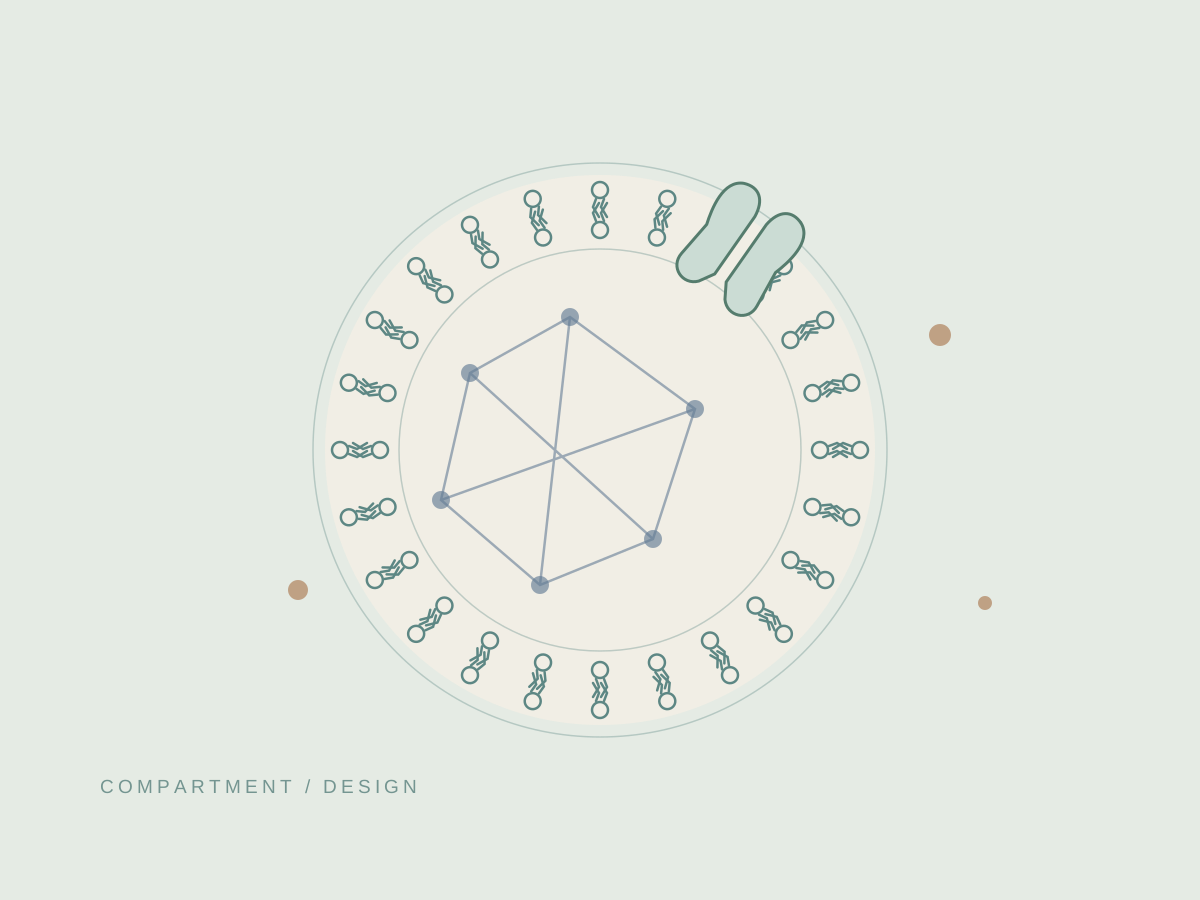
A membrane is a starting point for a designed system. Maintaining an interior requires more than enclosure.
Sample article: a demonstration essay for the Synthetic Biology topic. Replace it with your own writing before publication.
A boundary gives a system an inside and an outside. In a diagram, that distinction takes one line. In a designed cellular system, it becomes a set of questions about materials, exchange, and control.
Enclosure is the beginning
A lipid membrane can separate compartments, but a compartment alone does not reproduce the organization of a living cell. The contents matter, as do the processes that maintain them.
The design question is therefore more specific than “Can we build a container?” It asks which differences between an interior and its surroundings must be sustained, and what those differences allow the system to do.
Choose a function, then a boundary
A useful design begins with a limited function. What must enter? What should remain inside? Which measurements would show that the proposed function is actually taking place?
These questions connect molecular properties to system behavior. They also make the limits of a model explicit: a designed compartment may illuminate one cellular function without representing an entire cell.